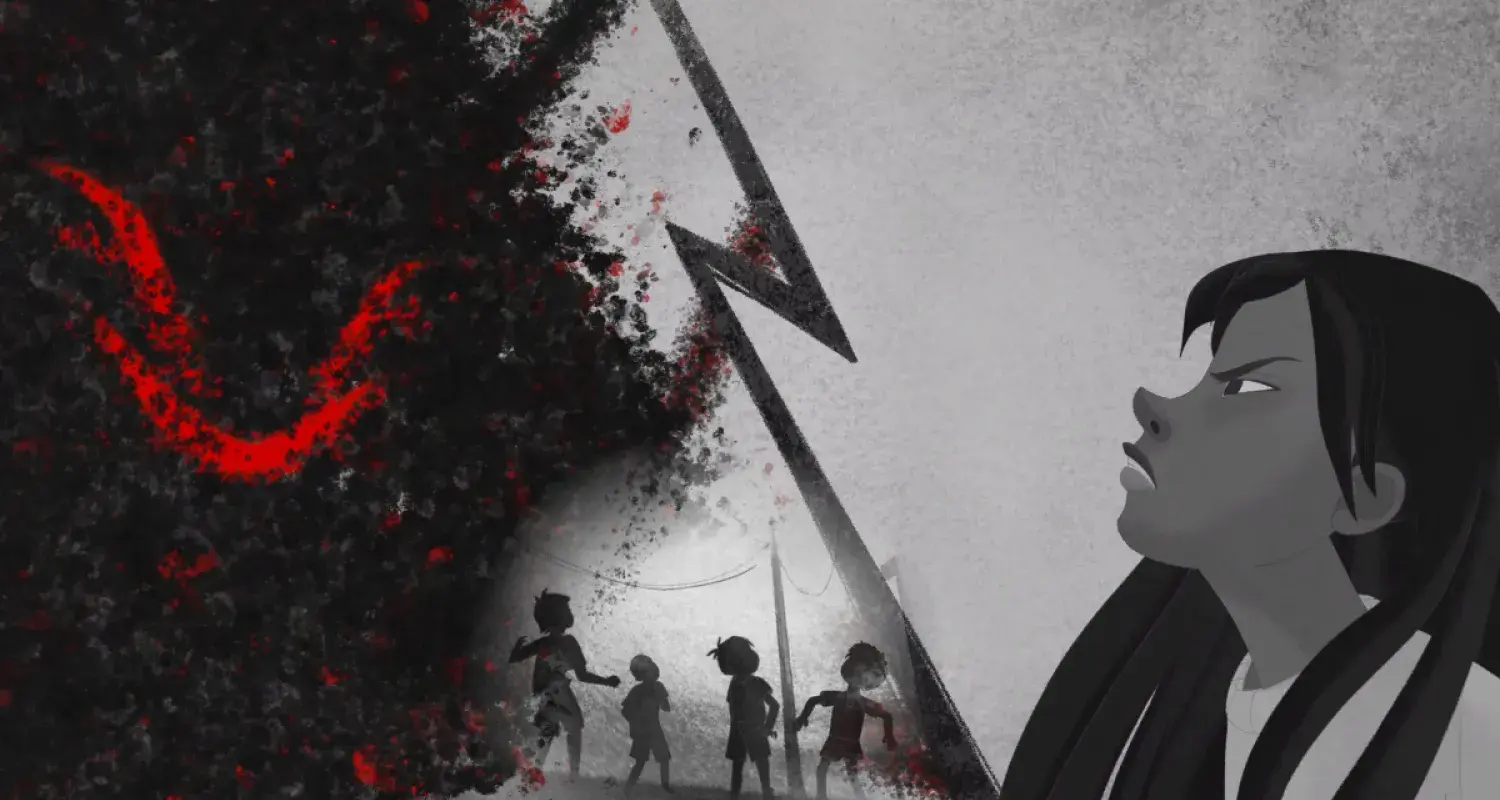
Telling a four-and-a-half-minute story without dialogue, narration, or subtitles is one thing. Animating it is another. Guilherme, Lead Animator at Flow Creative, was responsible for bringing Releasing Hope to life frame by frame, navigating particle simulations, character rigging, and the technical demands of a film built around a villain made entirely of mosquitoes. In this interview, he reflects on the animation process: what made the spectre so difficult to build, why realism was central to the storytelling approach, and how the team found its way through a project unlike anything the studio had taken on before.
Interview with Guilherme, Lead Animator, Flow Creative | Behind the Film
When you first received the storyboards, what stood out to you as an animator?
When I first received the storyboards, and even earlier during pre-production, it was already clear to me and the team how big the project was. But it was only once the storyboard was finished that we fully understood the number of shots and the level of complexity involved.
As an animator, I was obviously excited to be part of it, while also very aware of the challenges ahead.
Were there particular shots, emotions, or movements that immediately felt exciting or challenging to bring to life?
To be honest, most of the shots were both challenging and exciting to bring to life. The spectre shots stood out as the most elaborate and time-consuming, but the character work was also extensive and required a lot of experimentation and dedication.
How do you approach expressing emotion or storytelling through movement, especially without dialogue?
This is a great question, and it really guided our animation process. Telling a four-minute story without voiceover or dialogue was definitely a challenge. Our approach was to focus on realism: the realism of the characters' movements, but also making everything feel grounded, subtle, and believable.
In the early stages, the animation technique moved in a slightly different direction. Could you talk us through the tools and techniques you chose to use for this project?
Initially, the creative direction leaned more towards an abstract approach, focused almost entirely on pointillist scenes and moving particles that slowly morphed from one composition to the next. As the project evolved, that idea was integrated into a more narrative-driven piece, while still keeping the concept of an antagonist made of small particles representing mosquitoes.
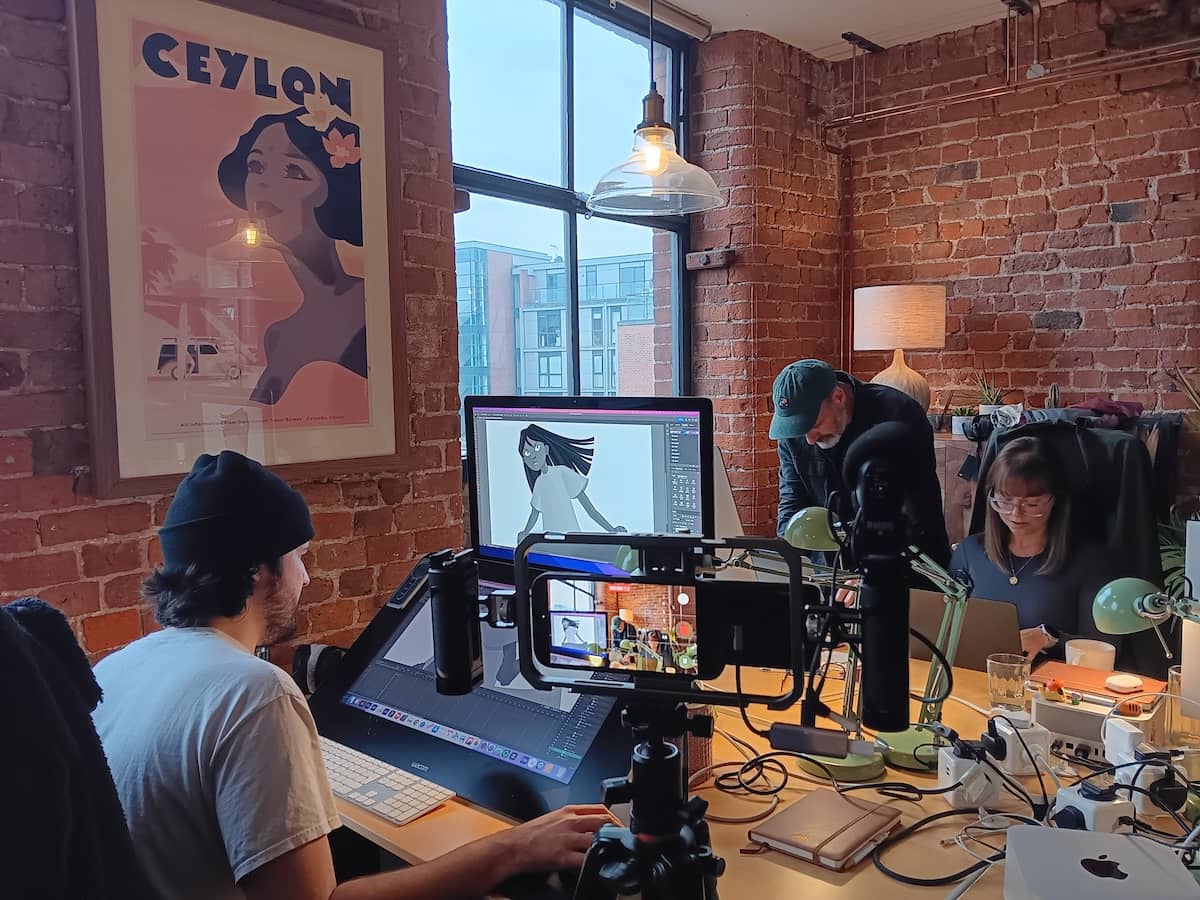
We tested a lot of different approaches and used any spare time during pre-production to experiment with tools. There wasn't a single method or workflow that worked for every shot. Each scene required something different. For the particle-heavy shots, especially those featuring the spectre, we used a mixed media approach between Cinema 4D and After Effects, with particle simulations done using Stardust.
Building the main animation and blocking in 3D gave us more freedom to explore movement and dynamics. Bringing everything into After Effects afterwards made it easier to assemble and gave us full control over the final look.
| ●Cinema 4D — 3D blocking & animation | ●Stardust — particle simulations | ●After Effects — compositing & final look |
What has been the most challenging scene or shot to animate in Releasing Hope, and why?
Any shot involving the spectre was challenging. The particle simulations and detailed motion made them quite heavy to process. At first, you would expect the final shots, where the spectre fights a crowd and eventually explodes and fades away, to be the hardest.
But because the project spanned several months, by the time we reached those shots, we had already gone through the learning curve. After working through all the earlier spectre scenes, we had developed a more efficient way of building and animating it. So in the end, those more complex shots were actually faster to produce than some of the simpler ones at the beginning.
"After working through all the earlier spectre scenes, we had developed a more efficient way of building and animating it. So in the end, those more complex shots were actually faster to produce than some of the simpler ones at the beginning."
Guilherme, Lead Animator, Flow Creative
Watch Releasing Hope now
The film is available to watch in full at releasinghope.tv — four and a half minutes, no words, designed to speak to anyone, anywhere.
Watch the film →