When dengue struck the city of Joinville in southern Brazil, it hit hard - overwhelming communities and leaving little relief in sight. Now, early results from Wolbito do Brasil's Wolbachia mosquito releases are offering renewed hope. For local public health leader Tamila Kleine, the project is deeply personal, shaped by her own experience of dengue and her commitment to protecting the city she calls home.
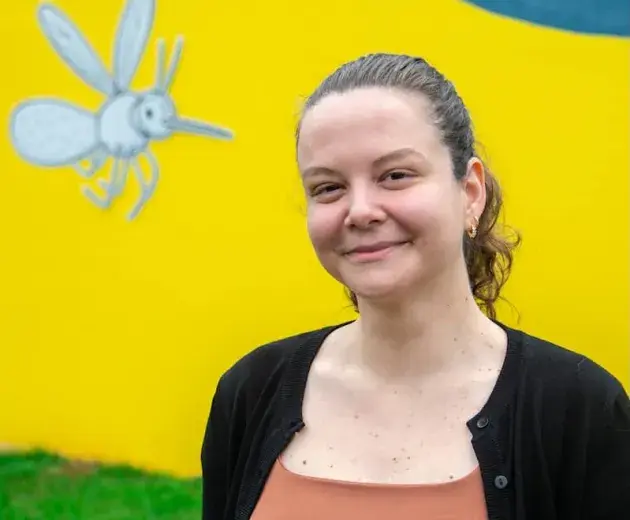
A personal encounter with dengue in Joinville
Tamila Kleine was just days into her new job combatting mosquito-borne diseases when she suffered from dengue. “As soon as I joined the project, I got dengue,” she says. “I contracted the disease and I could feel on my own skin how bad this really is.”
For Tamila, the symptoms were familiar. She had spent years working both on dengue research and more broadly focusing on zoonotic diseases in the city of Joinville, in southern Brazil’s Santa Catarina state.
“The danger of this disease and the fear that someone in my family could get it, someone from my group of friends, from my community. I’m from here. I think it’s an even greater motivation to keep going,” she emphasises.
A city searching for solutions after a dengue epidemic
When the first phase of Wolbachia (known as Wolbito in Brazil) mosquito releases started in early 2024, Joinville was still reeling from a dengue epidemic which had impacted many parts of the city.
Tamila managed the first phases of releases for WMP Brasil and reflected on how badly the community had suffered from mosquito-borne diseases when the project was first introduced to the city.
“When the Wolbachia method arrived in the municipality of Joinville, the region was going through a huge impact related to dengue,” notes Tamila. “We were coming from a dengue epidemic, with many cases and a high number of deaths. So, the arrival of the method also brought some hope after the implementation of the first phase.”
Promising early results from Wolbachia releases
Protecting close to 360,000 people and covering 17 neighbourhoods, the first phase of releases in Joinville have shown promising early results.
“In Joinville, the Wolbachia method has always had very good acceptance,” says Tamila, who is now the regional coordinator of implementation at Wolbito do Brasil, responsible for the south and southeast regions.
“The first phase had a very positive reception from the population, which has already seen some results from phase one and is eagerly waiting for the releases. Compared to the pre and post-Wolbachia periods, we had a huge reduction in cases, around 90 per cent reduction of dengue cases.
“However, it is still very recent. We cannot prove that it is solely because of Wolbachia, but it’s certainly part of this positive result, along with all the other services and activities carried out by the city’s Environmental Surveillance.”
Be Part of the Solution: Join Our Community
Discover how we’re transforming lives and combating mosquito-borne illnesses globally. Sign up for exclusive insights and updates delivered straight to your inbox.
Scaling up protection across Joinville and beyond
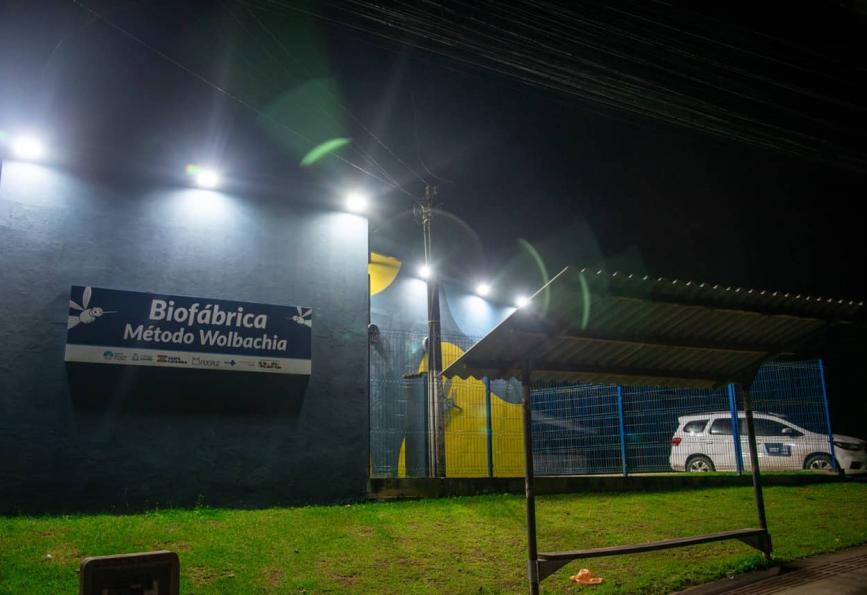
This second phase, led by Wolbito do Brasil, will reach almost 75 per cent of the city’s population, covering a further 15 neighbourhoods and 150,000 people.
The small biofactory in Joinville will also act as a regional hub for other neighbouring municipalities, including releases in Blumenau and Balneário Camboriú.
Tamila also explains that the team is almost three times smaller than during the first phase, thanks to changes in the biofactory production methods, while still maintaining the same delivery and quality.
“In the first phase, the choice of neighbourhoods was made by the Ministry of Health together with the municipality, spread across the city,” says Tamila. “Now, in this second phase, we are covering neighbourhoods that had not yet been included, but not in a particularly concentrated area north or south of the region. We are aiming to cover most of the municipality.”
Looking ahead: expanding protection across Brazil
Tamila is very positive about the future ambitions of the project.
“With the arrival of Wolbito do Brasil and the possibility of bringing Wolbitos to the entire Brazilian population, I can only see salvation, reassurance, and that we can truly serve the whole country.
“I’m very happy with everything we managed to achieve last year here in Joinville. Working with the Wolbachia method, having this opportunity. It was something really rewarding for me.”